
Beautiful Simplicity
A Father's Hidden Words and the Return to Wonder

Welcome to the first essay of Path Unfolding, a journey of rediscovery and reconnection with what matters most.
• • •
The Pull of Memory
Some journeys begin with a single step. Mine began with a single notebook, discovered in the gentle light of Easter Sunday in a house that echoed with absence. Like all meaningful transformations, the seeds were planted long before in a child's way of seeing that held more wisdom than I understood.
Perhaps that's why, after lunch with my sister and brother in suburban Houston, I felt a pull, not toward my condo back in Austin, but toward something unresolved. I was drawn by a quiet tug toward the past. Instead of heading home, I found myself steering toward my parents' house, just a few miles away from my sister's. A house that had stood empty for more than five years.
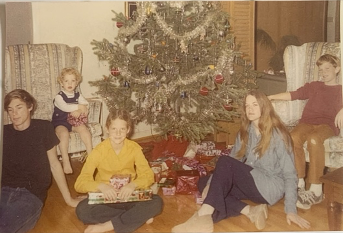
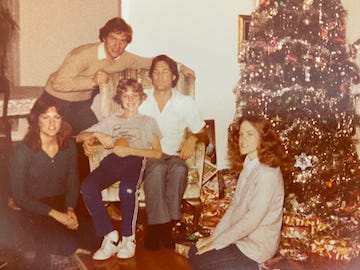
The house, though silent, still held a presence: a spectrum of memories spanning the joyful, the mundane, and the sorrowful. Since 1982, these walls had witnessed countless milestones: first days of school, graduations, laughter-filled birthdays, courtships, wedding parties (some enduring, others like mine quickly fading), grandkids, great-grandkids, and nearly four decades of Christmas celebrations in which I served as the emcee (a tradition begun in our first Houston home, when I was only 2).
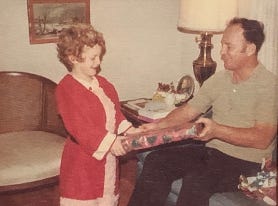
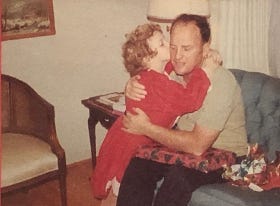
But over time, those memories became threaded with an inevitable weight of loss. My mother passed peacefully there in 2018, lying in the same bed that my father had died in seven years earlier. And my sister, Anne...well, her passing in 1985 left a mark on the house and our family that lingers in every corner and every life. a presence defined as much by our silence around it as by the loss itself.
• • •
An Unexpected Discovery
For decades, I had been seeking answers to unresolved emotions, loss, and grief, now believing that letting go of the house might be addition by subtraction. Ever since my mom passed, I’d often urged my siblings to sell—to let another family create new memories and bring in their light and laughter. Yet standing there that day, surrounded by its echoes, I felt profoundly grateful it was still ours.
Wandering through familiar rooms—my parents' room, my high school bedroom—I found myself in my sister's closet. Inside the very closet where she took her life, I reached up to an empty, dusty, long-forgotten shelf and pulled down a small blue notebook, a seemingly benign discovery that I never could have anticipated.
The simple, 40-page journal was dated 1974 and titled "#2.” It was clear my father had used it to capture thoughts following a Marriage Encounter retreat. Finding it on Easter Sunday—in a house where symbols of resurrection shared space with memories of both life and loss—felt like more than mere coincidence.
My father, a man who spoke in sports analogies and character-rich stories of his early life in New Orleans but rarely expressed emotions, had put pen to paper about his inner life. That alone was remarkable.
While most entries reflected a typical 1970s mindset of family, faith, financial updates, vacation options, and their relationship, there were occasional earnest attempts to document his “feelings”. This one addressed a new, physician mandated low-cholesterol diet:
"I feel good when people tell me I’m losing weight. I feel hungry... I feel concerned… I feel tired sometimes when I do not get meat mixed in. I feel pleased with your patience in helping me." Finally, in what I imagine was intended as a triumphant postscript, he declared, "Don’t tell me I don't speak of feelings after this one."
With his content and tone well established, I was lightly skimming through the journal when an entry dated 4/16/74 literally knocked me backwards.
Dear Jean,
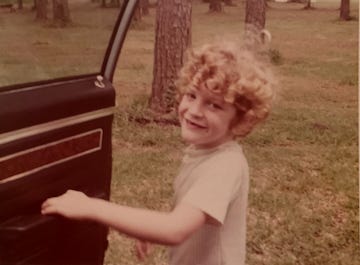
When I think of David's enthusiasm about almost everything, I'm reminded of the words Our Lord used: "Suffer the little children to come near me, for My Kingdom is of such." I feel that there is a beauty to enjoyment that comes from seeing things through uninhibited eyes and expressing one's self in an uninhibited way.It's a beautiful experience to be around a child when things are not rushed and he is just enjoying being himself and expressing himself regarding the things around him.
While writing this, I began thinking of the enjoyment I used to get while watching Stephen eat strawberry pie at Wyatt's. He didn't want to be anyplace else but where he was.
I am most thankful that you have the same quality as David, and I pray that you never lose it. In fact, I hope that it becomes contagious because I think the rest of us in the family could well benefit from such beautiful simplicity.
We have so much to be thankful for.
Love, Joe
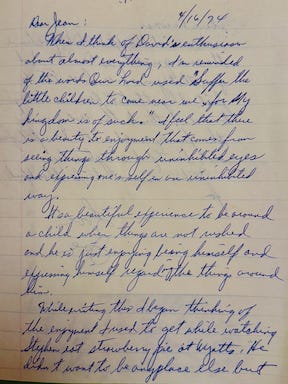
I froze. What had I just read? To find these words, written nearly 50 years ago to the day, felt nothing short of miraculous. I sat down, holding the fragile notebook, feeling the weight of time, of my life, and my family's journey collapse into a single moment. These were the words, the permission, the confirmation that I had been wanting to hear from my father for my entire life. Reading those words, I felt a surge of pride—and a wave of grief.
Here was my father, seeing me with such clarity and appreciation—not for what I have achieved or may accomplish, but simply for how I experienced the world in the moment. He recognized something magical in that essential way of being, something he wished he could reclaim for himself and share with our entire family. And he had written it down, preserved it, celebrated it, though he never spoke it aloud.
In that moment, sitting in my sister's closet with this unexpected treasure in my hands, I felt the strange collapse of time—the child I was then, the father who observed me, and the man I am now, all connected through these words. It was as if my father had thrown a lifeline across the decades, one that could pull me back to become my true, essential self.
My father's hidden appreciation of my childhood wonder became the unlikely catalyst for my adult journey back to that same quality. What struck me wasn't just that my father had observed this quality in me, but that on some level, I had always known it was there. The journal entry didn't reveal something entirely new, but rather confirmed and illuminated what already existed inside of me.
This is perhaps the most profound truth of self-discovery: the answers we seek are rarely found externally but rather recognized within. My father’s words were powerful not because they gave me something I didn’t have, but because they helped me remember what I had forgotten about myself.
• • •
Generations of Silence
My father was shaped by his Depression-era upbringing in New Orleans' Irish Channel, where our family had lived since the 1870s—a working-class Irish Catholic enclave where feelings remained unspoken and responsibilities came early. There, women worked hard and prayed harder, while men drank to find the peace their wives prayed for.
From those humble roots, my dad dedicated his life to creating a stable, middle-class home far removed from the struggles of his youth—providing us with private Catholic schools, summer camps, and family vacations he never knew as a child—while also prioritizing service to those less fortunate.
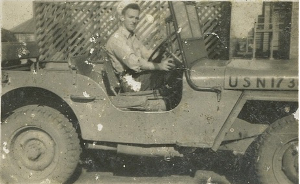
A pillar of the community, church and our family, this World War II veteran turned business leader had somehow broken through generations of emotional reticence to recognize and celebrate in writing something pure and full of wonder in me. Even more remarkably, he recognized this same quality in my mother, who somehow maintained her sense of wonder and simplicity while raising five children in an era that demanded constant sacrifice and practicality.
Our home was filled with caring love, though expressed through actions and events rather than words and emotions (the exception being when someone was in trouble with Dad—then there were emotions!). Like many families of that era, we became skilled at holding stories inside, following my father's example of turning away from pain, conflict, and loss.
Through car accidents, health crises, hospital stays, and life's many unexpected turns including losing our parents in 2011 and 2018, we maintained this pattern of seeking safety in silence.
While my siblings found comfort in this reticence, I struggled with unvoiced questions and unexpressed emotions—a pattern that has deeply shaped my friendships, intimate relationships, career, and even my fear of commitment, as I always dreaded the next potential loss waiting around the corner.
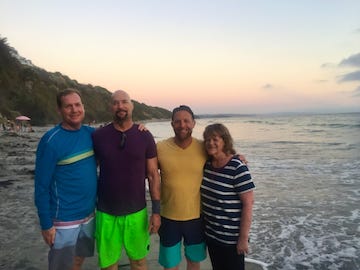
What deep bonds might have formed if we'd learned to express our emotions rather than suppress them? Even after moments of profound connection—like our father's powerful eulogy at Anne's funeral—we retreated to familiar silence, choosing space over support, self-reliance over compassion, safe friend circles over family. Our relationships are solid, we have been blessed and we care for each other, but they could be better—both for us as individuals, and as a model for their children, our nieces, nephews, and generations to follow.
This pattern of emotional reticence shaped not just how we related to each other, but even how I viewed my own future. At 56, I've now lived nearly twice as long as I expected to when I was a teenager. Such was the fragility I assigned to life after experiencing unprocessed early losses including a near fatal car accident at 14, and knowledge of a pattern of early, male death in my family tree.
• • •
Coming Home to Wonder
And now, as I stand here decades later, I see there was more at work—both grace and complexity—that preserved a chance for this wonder to resurface. The very silence that created distance between us also preserved these precious words, waiting to be discovered when I was truly ready. This unexpected gift created a bridge between generations, allowing me to discover a connection with my father that transcended our lack of meaningful depth of communication during his life.
It is astonishing that this notebook survived with its contents unexplored for half a century—moving from house to house, room to room, box to box, across our many attempts to organize and purge this house. Perhaps this shows there is wisdom even in our struggles to connect, in our imperfect attempts to love each other across the boundaries of generation and circumstance—a grace that was waiting for the right moment to be revealed.
In this light, I can see my father was doing the best he could with the tools he had. Though shaped by his era's emotional reticence, his depth of insight showed in unexpected moments, like in this simple notebook entry where he recognized something I never heard him express aloud: the profound beauty of present-moment joy. The journal revealed an inner life and emotional depth that remained hidden beneath the surface of our daily interactions. Had he found ways to express these sentiments openly, he would have transcended the constraints of his generation.
His biblical reference to "suffer the little children" speaks to something profound: that humility and childlike openness are the path to a peaceful, more authentic life. My mother embodied this truth, carrying this gift through decades while raising our family, caring for grandchildren, and battling cancer twice—all the while showing that it was possible to maintain wonder even amid life’s complexities. I can still picture her stopping our station wagon on road trips to admire vistas along the highway, singing along to 70s Classic Rock (and Yacht Rock!), or celebrating my travels and sunset photos when she could no longer join.
While my father tracked life through box scores, business metrics and church attendance, ever the faithful accountant of both profits and the parish, my mother measured it in moments of unexpected depth, beauty, and awe. She knew instinctively what took me decades to learn: that life's richness isn't found in the tallying of achievements, but in the ability to be fully present for each moment as it unfolds.
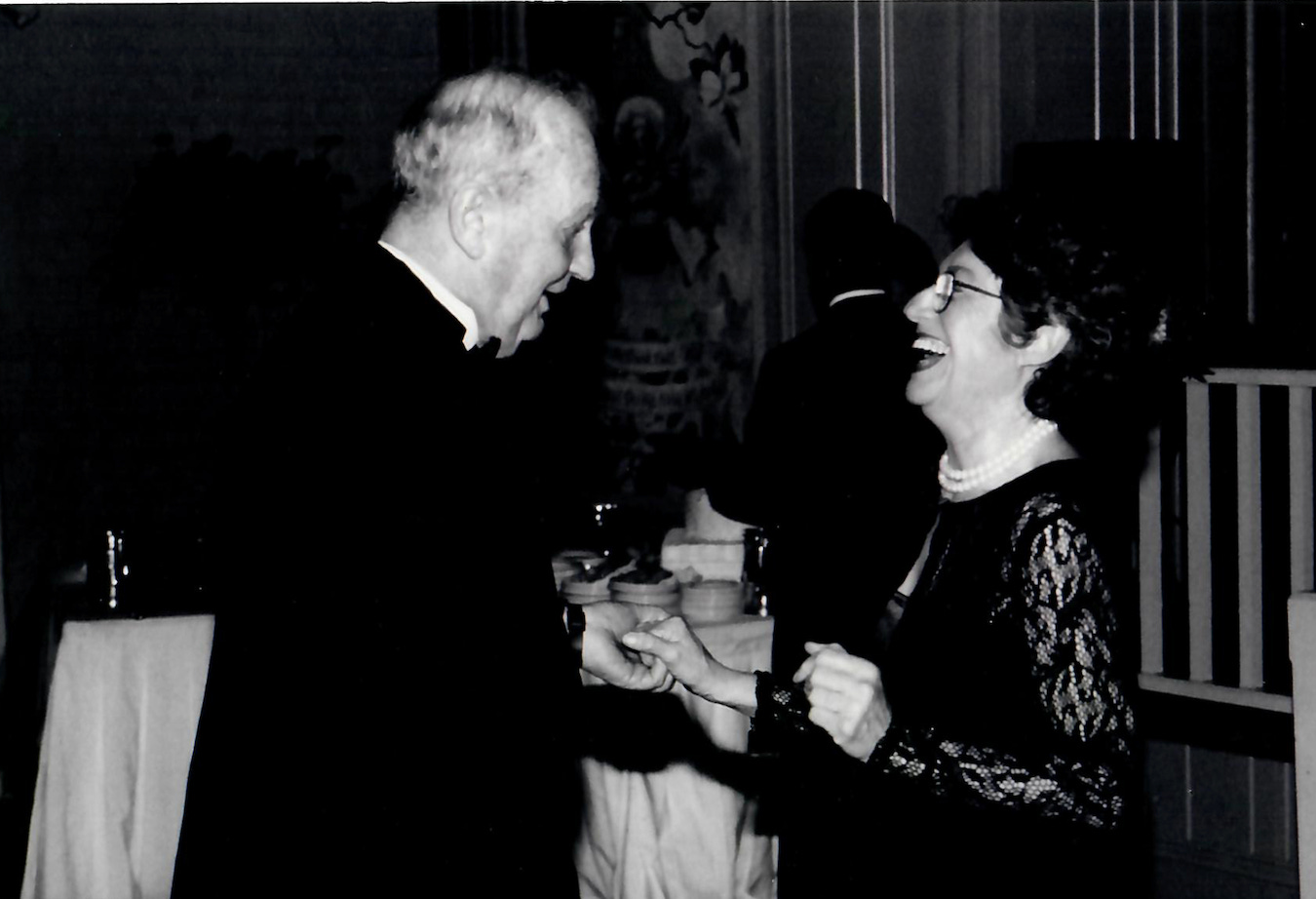
Between my father's hidden wisdom and my mother's lived example lay the path I now seek to follow, one that honors both their legacies while reclaiming my own essential nature.
• • •
Embracing the Full Spectrum
Zen monk Shunryu Suzuki wrote, “In the beginner's mind there are many possibilities, in the expert's mind there are few.” While simplicity and wonder come naturally to children, reclaiming it as adults often requires letting go of the protective armor, the masks, and stories we put on daily, most accumulated instinctively and subconsciously.
For years, I built walls to protect myself, moving further from my core with each new layer. This armor, so instinctive, led me to hide behind a façade of friends, success and activity based joy (concerts, sports, travel), all while numbing the deeper questions beneath. That quality my father saw, the beautiful simplicity, became mostly invisible beneath the weight of self-protection.
I spent years walled off from grief, then moments drowning in it, with neither extreme delivering the healing and love that I craved. Only by letting both sorrow and hope breathe side by side did I begin to find a steady path forward. As Brené Brown wisely writes, “The dark does not destroy the light; it defines it. It's our fear of the dark that casts our joy into the shadows.”
The ancient wisdom found in traditions from the Talmud to modern writers like Anaïs Nin - that “we see the world not as it is, but as we are” - had never felt more true. When I was consumed by fear, I saw threats everywhere. When I numbed myself, the world appeared flat and distant. It was only when I allowed myself to experience the full spectrum of emotions that the richness of life came into focus.
This truth also helped me understand how my parents and siblings could have vastly different experiences of the same circumstances - each of us perceiving our shared reality through the unique lens of our own emotional patterns, histories, and sensitivities. Then, I began to understand the multiple truths that can coexist within a single family.
Our society and even many religions emphasize purity and perfection, encouraging us to deny or suppress the difficult and challenging aspects of the human condition ("the dark"). This all-or-nothing dial and emphasis on purity prevents us from fully experiencing life. Instead, by embracing its existence and operating in a dualistic state, we can access both light and dark authentically.
This principle of integration applies to our entire emotional landscape, especially grief. Acknowledging grief is not a choice between numbing avoidance and wallowing, rather we can let grief guide us toward deeper compassion and presence.
If we’re willing to let it in—gently, honestly, and on our own time—feeling grief also lets us feel more joy. That is the great irony: what we're so afraid of feeling actually unlocks our capacity for positive emotions as well.
After Anne's passing, I alternated between distraction through constant activity and emotional detachment as well as moments of overwhelming sorrow.
It wasn't until decades later, standing in places that held memories of her, like the Texas beach where she and I once collected shells together and later we mourned her death as a family, that I could finally experience both the loss and the gratitude simultaneously, allowing the memory to be bittersweet rather than just bitter or completely suppressed.
• • •
Reclaiming Simplicity
Over these past few years of deeper reflection and connection, I've felt my parents' presence and guidance, along with Anne's, as if they are encouraging me to fully feel and share our story.
In pulling my past into the present, I'm discovering how memory, wonder and love can coexist without overshadowing each other.
Now, I want nothing more than to honor all of their legacies: my dad's hidden wisdom, my mom's lived example, and Anne's unrealized potential.
What my father saw wasn't just childlike enthusiasm. It was a way of being in the world that held its own wisdom, a simplicity that needed no justification or achievement to prove its worth. I always knew this essential self was present; perhaps I just needed permission to trust and feel it all. While this belief must start within, I truly relish his written reminder.
As the youngest of five, my path was in many ways easier, cleared by siblings who came before, enhanced by my parents' improving financial standing, but it also meant witnessing everything, absorbing not just my own grief but the silent echoes of what came before me. For my entire life, I've carried our family's unspoken stories: paths not taken, words not shared, emotions held at bay.
Sometimes I question why I choose to bear this weight, whether it would be simpler to focus solely on my own journey rather than our collective one. Perhaps this is why finding my father's notebook feels like both a homecoming and a gift, one that bridges my personal rediscovery with our shared history, offering a path for all of us toward deeper connection, each in our own time.
I recognize now that true wisdom begins in wonder, in accepting how little we know, in approaching life with a warm heart and a welcoming mind. The path home to ourselves begins in this same wonder. Even in empty houses, new life and wisdom wait to be discovered.
Through this unexpected journey of rediscovery, I've learned that only through an open and loving heart, the same openness my father once observed in me, can we authentically connect with ourselves and the world around us. As Rumi summarized, "Love is the key that opens all locks." And so it goes that the measure of a life isn't what we do, but what we do it for.
As my father wrote 50 years ago, I hope this becomes contagious, because I believe all of us could benefit from reclaiming and embodying more beautiful simplicity in our lives.
• • •
An Invitation
If this story resonates, perhaps you too feel that beneath the layers of achievement and expectation, something essential is waiting to be remembered. I'll be sharing more about this journey in Path Unfolding, exploring what it means to embrace the beauty of simply being, and how returning to wonder might open doors we had forgotten were there.
Please feel free to subscribe to Path Unfolding or leave a comment if you’d like to share your own reflections on rediscovering wonder.

Both a beautiful piece and journey, David. Life itself has far more to teach us than books and retreats and advice...and the most unpredictable of discoveries on dusty shelves can become revelation. Really relate to the puritanical culture keeping us away from the dark, and I have come to see how going fully into it has also allowed me to experience light in a completely different way. Contrast is a wonderful tool, and to transcend preference for either is where the juice of life resides.
The thoughts and insights you’ve shared through our conversations about grief and loss are exquisitely presented in this essay. The beauty of simplicity and authentic presence comes shining through. I love this for you and your family.